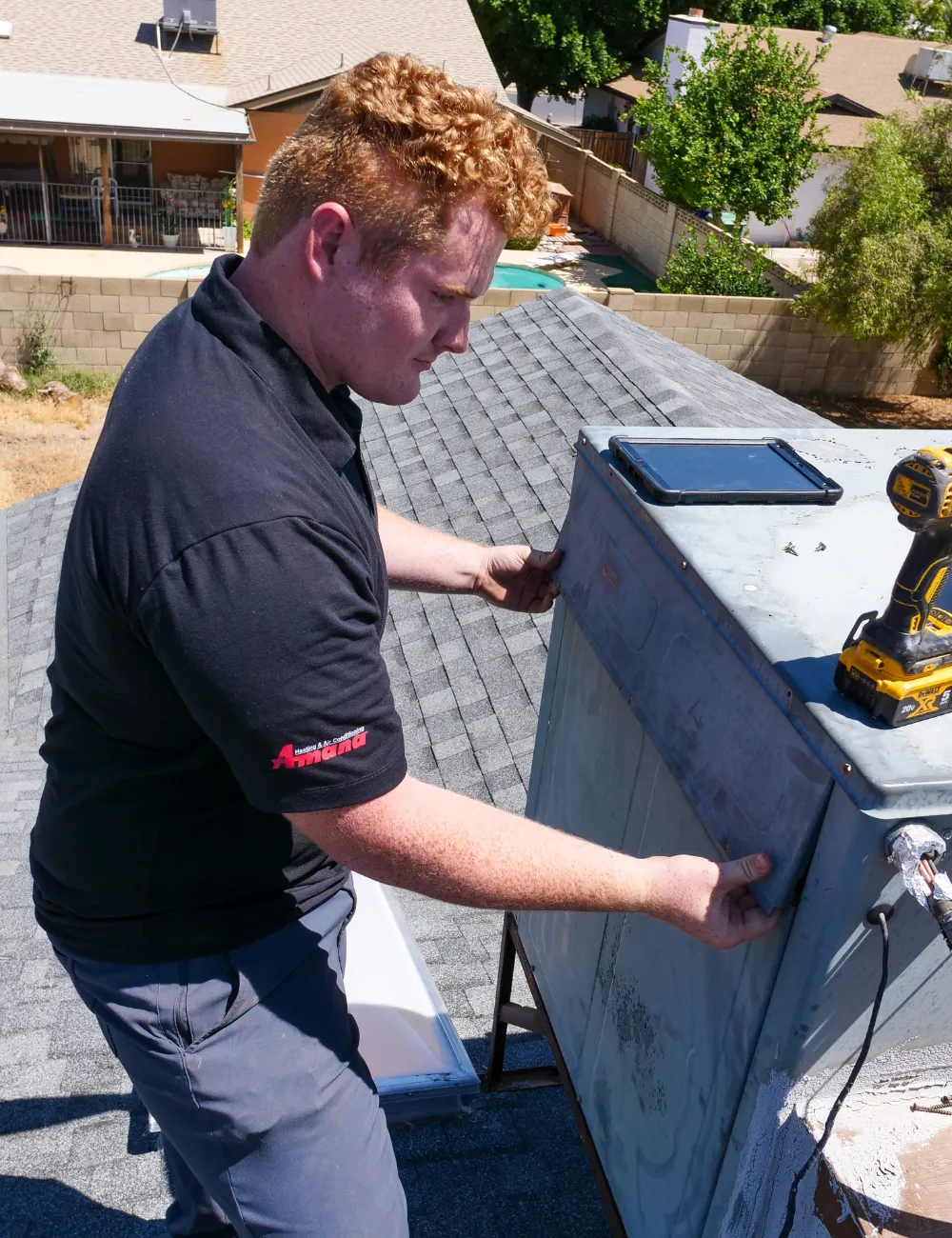
Why Phoenix Is Especially Hard on AC Systems
Phoenix consistently ranks as one of the hottest cities in the United States, with summer temperatures regularly exceeding 115°F. This extreme heat pushes air conditioning systems to their absolute limits, and even well-maintained units can struggle under the strain.
Understanding the most common causes of AC breakdowns in Phoenix helps homeowners take preventive measures and recognize early warning signs before a minor issue becomes a major emergency.
The following issues account for the vast majority of emergency AC calls our team handles during the summer months.
Top Causes of AC Failure in the Phoenix Area
- Compressor failure — the heart of your AC system, compressors fail from electrical issues, refrigerant problems, or simply overwork in extreme heat
- Capacitor burnout — capacitors help start and run motors. Phoenix heat accelerates their degradation, making this the single most common summer repair
- Refrigerant leaks — low refrigerant forces the system to work harder and can cause the compressor to overheat and fail
- Clogged condenser coils — dust storms and desert debris coat outdoor coils, drastically reducing heat transfer efficiency
- Electrical failures — heat causes wiring to expand and contract, loosening connections over time and creating intermittent or complete failures
- Frozen evaporator coils — ironically common in the hottest months, caused by restricted airflow or low refrigerant levels
- Thermostat issues — older thermostats can malfunction in extreme heat, sending incorrect signals to the AC system
Preventing Breakdowns Before They Happen
- Schedule a professional tune-up every spring before the heat arrives
- Change air filters monthly during peak cooling season
- Keep the outdoor unit clean and free of debris
- Listen for unusual sounds and address them promptly
- Monitor your energy bills for unexpected spikes that indicate declining efficiency
Everest Air offers preventive maintenance plans that catch these issues early, before they leave you without cooling on a 115-degree day. Our technicians know the specific failure patterns common to Phoenix-area systems and inspect accordingly.
